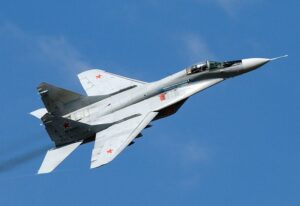
Ukraine’s Air Force Today: All Aircraft + Details
Ukraine’s inventory includes a mix of legacy platforms like the MiG-29, Su-27, Su-24, and Su-25, alongside newly acquired Western aircraft.

Ukraine’s inventory includes a mix of legacy platforms like the MiG-29, Su-27, Su-24, and Su-25, alongside newly acquired Western aircraft.

The weirdest-looking planes ever built, ranked for their odd designs, ambitious concepts, and sometimes just plain bizarre appearances.

A list of the most important milestones in the history of hot air balloons, showcasing their development and contributions.

Texas, with its vast skies and rich military heritage, has produced some of the most legendary fighter aces in American history.

All about the Pugachev’s Cobra, an advanced aerobatic maneuver that highlights the exceptional agility and performance of fighter jets.









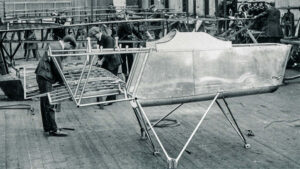
The Vickers Boxkite was a British experimental monoplane aircraft used in the flying school at Brooklands. They had a 50 hp Gnome engine.
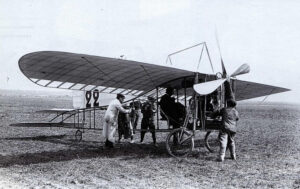
The Wright Flyer or Wright I was an experimental airplane invented and flown in 1903 by brothers Wilbur and Orville Wright.

The Sopwith Three-Seater was one of the first aircraft designed and built by the Sopwith Aviation Company before World War I.
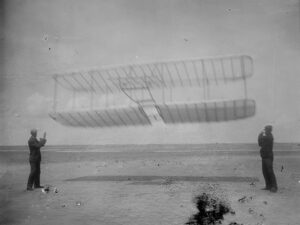
The Wright Glider was a series of four experimental aircraft (1 kite and 3 gliders) designed by Orville and Wilbur Wright in 1900-1902.

The Short S.38 was a British coastal patrol and trainer built by Shot Brothers. It fley for the first time on 30 August 1912.
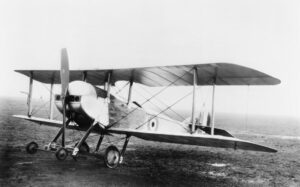
The Martinsyde S.1 was a British biplane aircraft ith a Gnome engine in tractor configuration built during the early part of World War I.

The Voisin V was a successful French pusher-type bomber aircraft used during World War I. It had a 150-hp Salmson P9 engine.
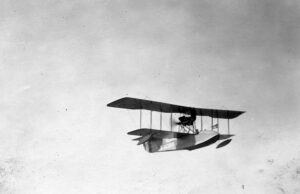
The Aeromarine 40 was an American two-seat flying boat manufactured by the Aeromarine Plane and Motor Company for the US Navy.
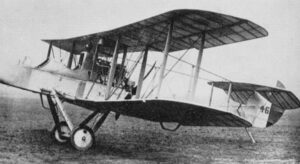
The Airco DH.1 is a single-seat biplane fighter aircraft and one of the most important aircraft designers of the 20th century.

The Morane-Saulnier P was a French parasol wing two-seat reconnaissance airplane used during World War I until 1917.
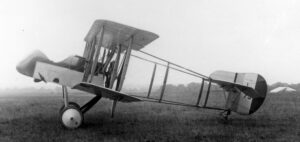
The Airco DH.2 is a single-seat biplane fighter aircraft introduced in 1915. It was the first British fighter to have a forward-firing machine gun.
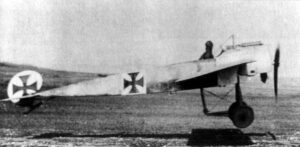
The Fokker Eindecker III (or E.III) was a German single-seat monoplane fighter aircraft used during World War I.
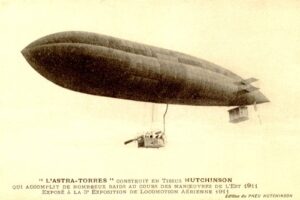
The Astra-Torres Airship was a French non-rigid airship built by Société Astra between 1908 and 1922 and designed by Leonardo Torres Quevedo.
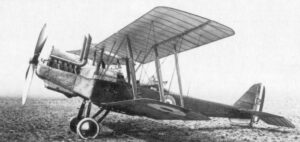
The Royal Aircraft Factory R.E.8 was a British two-seat bomber and reconnaissance biplane designed by the Royal Aircraft Factory.
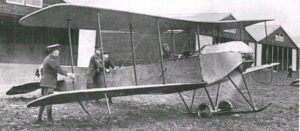
The Avro 500 or Type E/Es is a family of British military biplane aircraft and forerunner to the outstanding WW1 Avro 504.
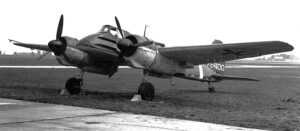
The Henschel Hs 129 was a round-attack aircraft fielded by the German Luftwaffe and used in Tunisia and on the Eastern Front.

The Grumman F4F Wildcat is an American fighter aircraft used by the United States Navy and the British Royal Navy during WW2.

The Bell YFM-1 Airacuda was an American heavy fighter and interceptor aircraft developed by Bell Aircraft Corporation during the mid-1930s.
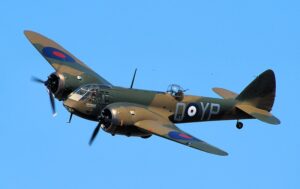
The Bristol Blenheim was a British light bomber aircraft used extensively in the first two years of the Second World War.

The Kawasaki Ki-102 was a Japanese twin-engine, two-seat, long-range heavy fighter warplane used during World War II.
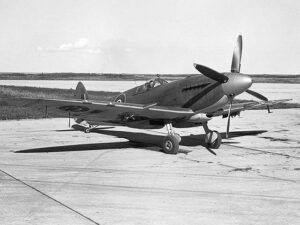
The Supermarine Seafire was a naval version of the Supermarine Spitfire and the Hawker Hurricane. It was used during World War II.

The Kawanishi N1K was a fighter aircraft of the Imperial Japanese Navy developed in two forms (the boatplane Kyōfū and the land-based Shiden)
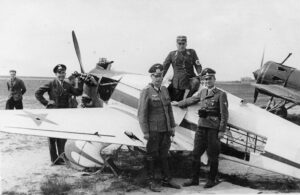
The Yakovlev UT-1 was a single-seater trainer aircraft used by the Soviet Air Force during WW2, from 1937 until the late 1940s.

The Fokker G.I, or “Le Faucheur” (The Reaper), was a heavy Dutch twin-engine fighter and reconnaissance aircraft developed in the late 1930s.

The Mitsubishi A7M “Reppū” was a Japanese carrier-based fighter aircraft designed as the successor to the Imperial Japanese Navy’s A6M Zero.